
Commercial flat-top grills accumulate cooking oils, fats, proteins and carbonized residue. As buildup is repeatedly heated, removal can become more difficult. The useful question is not whether a grill cleaner is described as “powerful.” It is whether the product and process can release the actual buildup without turning routine cleaning into unnecessary labour.
Degreasing and Carbonized Buildup Are Not the Same Job
A general-purpose degreaser can be useful for fresh grease and oily soils, but old heated cooking residue may require chemistry intended for grill and oven cleaning. That is why a commercial kitchen should not assume the same cleaner is ideal for countertops, floors and heavily soiled cooking equipment.
A Real VIVE-GRILL Field Application
In the field application shown below, VIVE-GRILL was sprayed neat onto the soiled commercial griddle, allowed to dwell for approximately 15 seconds, and then rinsed with water. Heavy scrubbing was not required for the observed result.
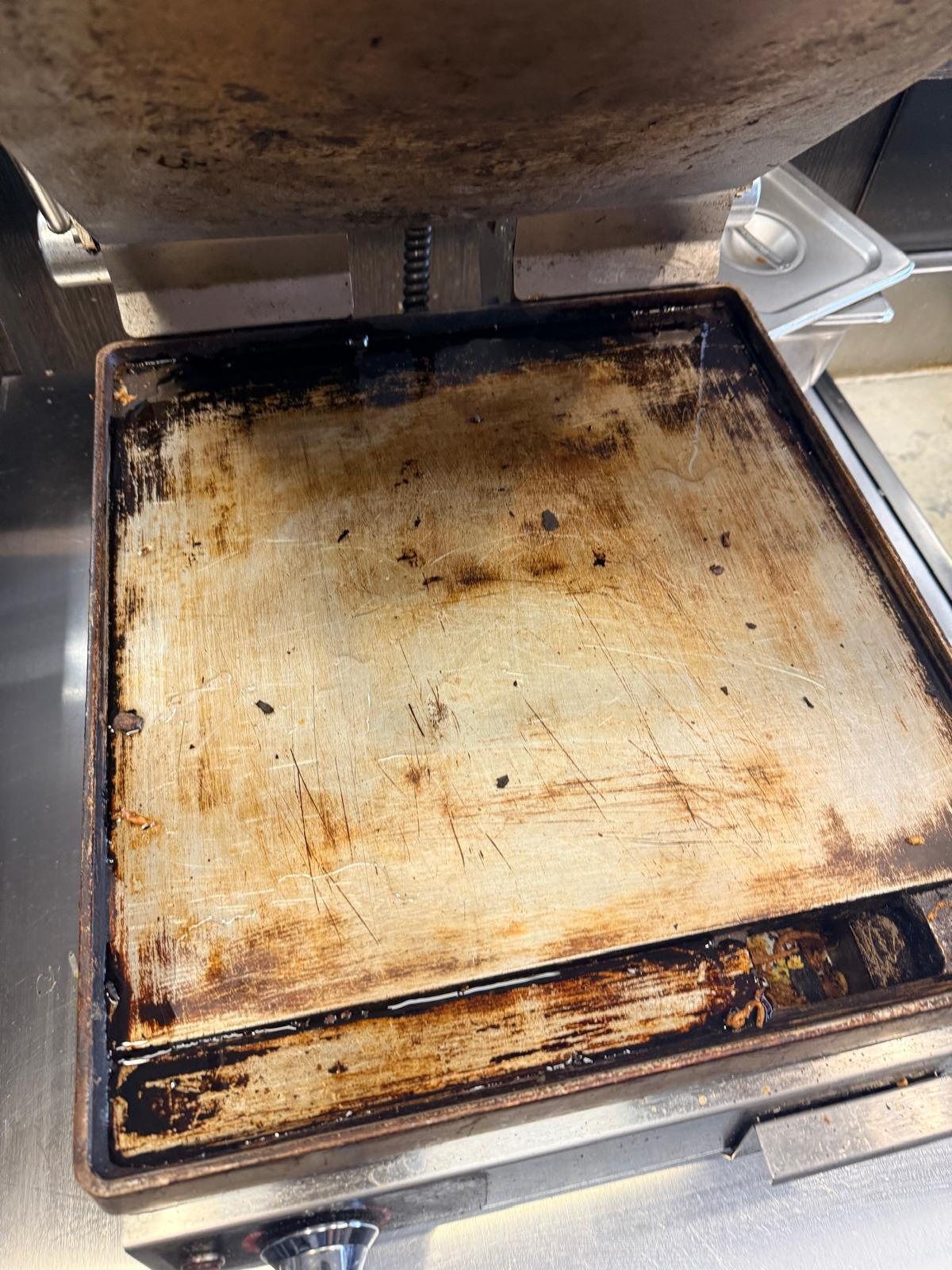
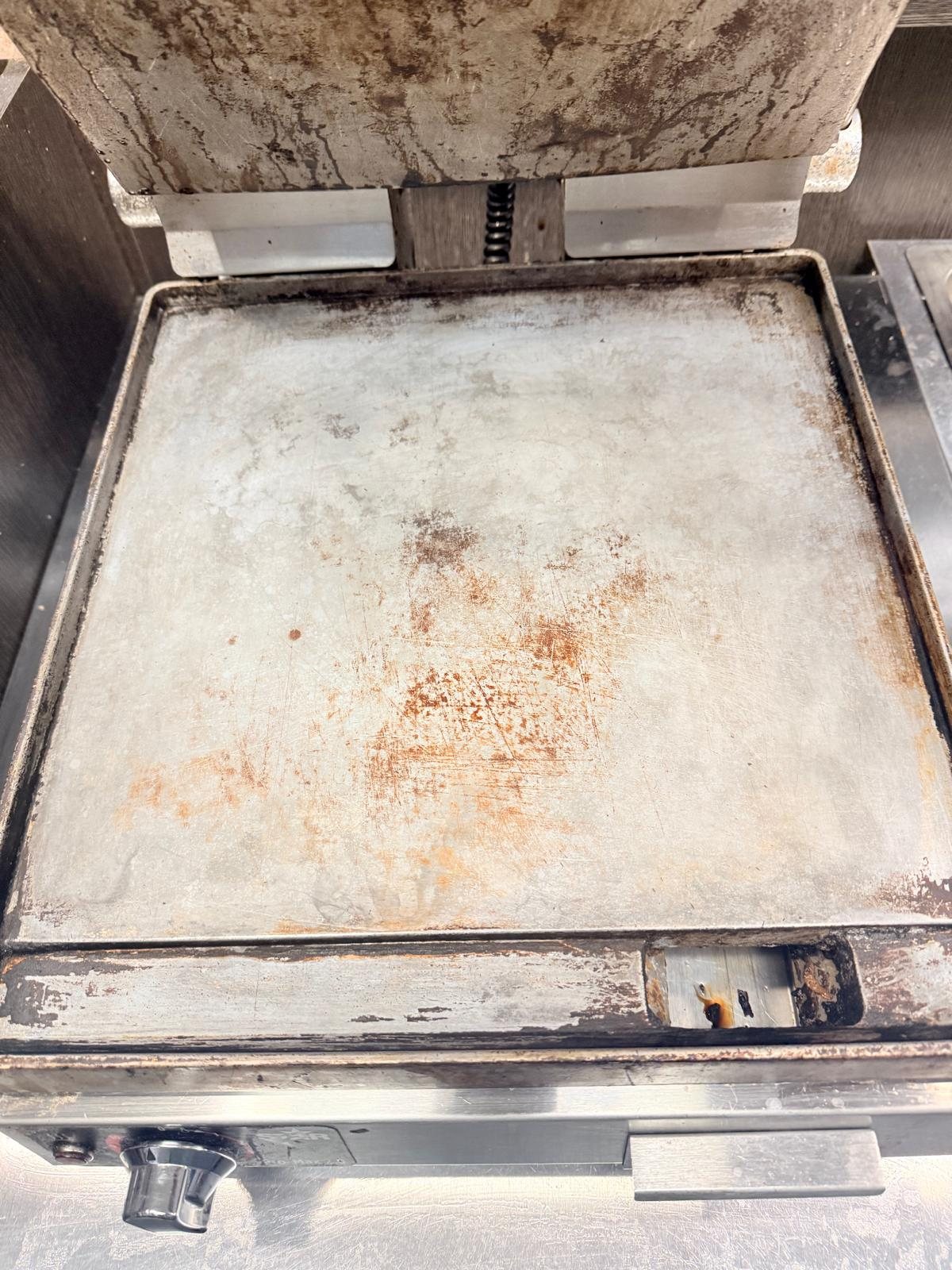
This is one documented application, not a guarantee that every soil or surface will respond identically. Soil load, temperature, surface condition and application method can change the result.
A Practical Grill-Cleaning Process
Always follow the current product label, SDS and equipment manufacturer's requirements. Confirm surface compatibility before use. In particular, highly alkaline grill cleaners may not be appropriate for aluminum or other sensitive materials.
- Identify the cooking surface. Confirm the cleaner is compatible with the equipment.
- Remove loose debris. This keeps the chemical focused on adhered soil.
- Apply the cleaner as directed. Avoid uncontrolled overspray onto surrounding surfaces.
- Allow the appropriate dwell. Do not assume longer is always better.
- Use mechanical action only as needed. The goal is an effective process, not unnecessary scrubbing.
- Rinse as required. Food-service equipment needs a cleaning process appropriate to its use and the product directions.
What a Kitchen Should Compare
Compare cleaning time, amount of product used, dwell time, required scrubbing, rinsing, compatibility and total labour. A product that costs slightly more per litre can still be less expensive to use if the process requires materially less time or product—but that should be demonstrated in your own operation.
See the documented result in our field evaluations or explore our commercial kitchen cleaning page.
Frequently Asked Questions
Can a general degreaser replace a commercial grill cleaner?
Sometimes fresh grease can be handled by a general degreaser, but heavily heated or carbonized cooking soil can require a product and process designed for grill or oven cleaning.
Did the VIVE-GRILL field test require scrubbing?
Heavy scrubbing was not required in the documented application. VIVE-GRILL was applied neat, allowed to dwell for about 15 seconds and rinsed with water.
Can grill cleaner be used on aluminum?
Do not assume so. Highly alkaline grill cleaners can be incompatible with aluminum and other sensitive surfaces. Follow the current product label and confirm equipment compatibility before use.
Need to Evaluate VIVE-GRILL?
We can discuss the cooking equipment, soil and cleaning process before you test the product.
Request a VIVE-GRILL Sample